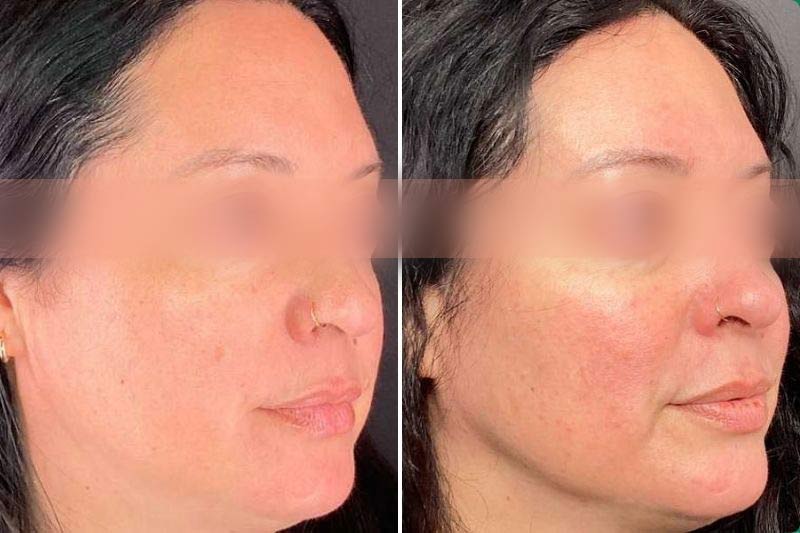
Xerf and Sofwave are skin-tightening treatments that provide similar results but use different technologies. Sofwave uses ultrasound and is backed by years of clinical research. Xerf is a recent invention that uses radiofrequency (RF) energy. This guide compares the treatments to help you find the right fit for your skin goals.
Kristina Cadwell
November 4, 2026
·
7 min read
What Is Sofwave?
Sofwave™ is an ultrasound treatment that tightens and lifts the skin by stimulating collagen and elastin production. Its Synchronous Ultrasound Parallel Beam (SUPERB™) technology uses seven parallel ultrasound transducers to deliver heat to the mid-dermis, creating controlled zones of thermal injury. The skin responds by building new collagen and elastin fibers.
A built-in cooling system, SofCool™, protects the skin’s top layer and keeps the treatment comfortable.
What Is Xerf?
Xerf is a radiofrequency (RF) treatment that also stimulates collagen and elastin production. Its dual-frequency technology uses two energy settings at once to deliver heat at several depths, creating controlled warming of the tissue. The skin responds by tightening right away and building new collagen over the following weeks.
The device has a built-in cryogen cooling system that protects the top layer of the skin and keeps the treatment comfortable.
What Are the Differences Between Sofwave and Xerf?
The table below shows the key differences between Xerf and Sofwave. Each point is explained in more detail in the sections that follow.
Xerf
Sofwave
Technology
Dual-frequency monopolar radiofrequency.
Parallel-beam ultrasound (SUPERB™).
Energy Depth
Multiple depths, from upper dermis to deeper fibrous tissue.
One precise depth, about 1.5 mm (mid-dermis).
FDA Status
Cleared in August 2025 for electrocoagulation and hemostasis.
Cleared for facial lines and wrinkles, eyebrows, submental laxity, neck laxity, upper arm laxity, cellulite, and acne scars.
Session Duration
30 – 60 minutes.
30 – 45 minutes.
Number of Sessions
Often a series, based on the provider’s recommendation.
Usually one.
Longevity of Results.
About one year.
Up to one year.
Downtime
None.
None.
Cost
$1,500–$3,000 per session.
$3,000–$3,500 per session.
Who Is a Good Candidate for Sofwave and Xerf?
Both treatments work best for mild to moderate skin laxity. Neither can replace a surgical facelift when sagging is advanced.
Sofwave
Sofwave is a good solution for adults noticing early signs of aging, typically in their 30s and older. Ideal candidates have:
Fine lines and wrinkles on the face or neck.
Mild to moderate sagging in the brows, jawline, cheeks, under the chin, or neck.
Sofwave heats water in the skin rather than targeting pigment (melanin), so it suits all skin types and tones, including darker skin.
Xerf
Xerf is for people who want an immediate tightening of mild to moderate laxity, especially along the jawline, lower face, and neck. The manufacturer states that it is suitable for all skin types.
Providers may advise against both treatments in case of pregnancy, breastfeeding, implanted electronic devices such as pacemakers, metal implants in the treatment area, active skin conditions, bleeding, and autoimmune disorders.
What Are the Benefits of Sofwave and Xerf?
Both treatments are non-invasive and need no recovery time. Each also has its own advantages.
Sofwave
Sofwave is among many skin experts’ favorite treatments because of its well-researched effectiveness and safety. It is precise and gentle, has broad FDA-cleared uses, and typically requires a single session.
Xerf
Many patients and providers report visible tightening immediately after treatment, with further collagen-driven improvement over time. They also describe the experience as less painful than most other RF tightening procedures, including Morpheus, Thermage, and Emface.
What to Expect During Sofwave and Xerf Treatments?
Xerf and Sofwave are quick, straightforward treatments. The provider cleanses the skin, marks the treatment zones, and moves a handheld applicator over the area.
Sofwave
Most providers apply a topical numbing cream for 20–30 minutes first, though this step is optional. The provider then glides the Sofwave handpiece over the skin in sections. You may feel pulses of warmth, mild tingling, or brief prickling. A session lasts about 30–45 minutes, depending on the treatment area size. You can resume normal activities immediately.
Note: See our article on whether Sofwave hurts for more information on what to expect.
Xerf
The provider places a grounding pad on the patient’s back, applies gel to the treatment area, and glides the Xerf handpiece over the skin to deliver RF energy with integrated cooling. Patients describe a warm sensation, like a hot stone massage, with occasional pulses of more intense heat in bony areas such as the jawline. A session takes 30–60 minutes, and your skin may look pink briefly afterward.
What Are the Results of Sofwave and Xerf Treatments?
Both treatments stimulate collagen to firm and smooth the skin, but they differ in how quickly results appear and how long they last.
Sofwave
Some patients notice a subtle difference right away, but the visible improvement develops gradually as new collagen forms. Most people see the best lifting and smoothing between eight and twelve weeks, with continued refinement for several months.
Results typically last up to a year, and many patients return annually.
Xerf is known for its noticeable tightening effect immediately after the session. Further improvement occurs over the next weeks as the body produces more collagen.
Providers often recommend a second session a few weeks after the first. Patients and providers report that results last about a year.
Sofwave vs. Xerf Aftercare
Neither treatment requires recovery, but a few simple precautions help your skin heal faster and optimize results.
Avoid retinol and other strong skincare ingredients, including brightening agents, for 24 hours.
Avoid heat sources such as saunas, hot yoga, tanning beds, and prolonged sun exposure for 24 hours.
Keep the skin hydrated and use a gentle moisturizer.
Temporary skin reactions are the most common side effects of both Sofwave and Xerf.
Sofwave
Common side effects include mild redness, swelling, tenderness, and tightness. They usually fade within a few hours.
Less common risks listed in the treatment’s clinical information include bruising, changes in skin pigmentation, and skin erosion. No serious adverse events were reported in clinical studies.
Xerf
Expect temporary redness, warmth, mild swelling, and tenderness.
Less common risks include blistering, burns, bruising, and pigment changes, especially with overly aggressive settings.
Some dermatologists have also raised concerns about fat loss with deeper RF heating, while others consider the risk low. Because Xerf is new, long-term safety data is still limited.
How Much Do Sofwave and Xerf Cost?
Prices depend on the treatment area, provider’s experience, and med spa location. Neither treatment is covered by insurance.
Sofwave
At Vibrant Skin Bar in Phoenix, Sofwave Face costs $3,000, and Sofwave Face and Neck costs $3,500.
Since most patients need just one session per year, there are no recurring package costs. Our $50 consultation fee is waived if you book your treatment.
Read our article on the Sofwave cost for area-by-area pricing.
Xerf
Providers generally charge between $1,500 and $3,000 per session. A series of sessions is often recommended, so the total cost can add up. Ask your provider how many sessions they expect you’ll need.
Sofwave vs. Xerf FAQ
Here are quick answers to the most common questions patients ask when comparing these treatments.
Are Sofwave and Xerf FDA Approved?
Both treatments are FDA-approved. Sofwave has multiple aesthetic clearances, including wrinkle reduction and lifting of the brow, chin, and neck.
Xerf was cleared in August 2025 for electrocoagulation and hemostasis, and the manufacturer describes its skin-tightening effect as the result of soft-tissue coagulation.
Are Sofwave and Xerf Painful?
Neither is considered very painful. Sofwave typically feels warm and is accompanied by tingling or sharper pain. Patients often rate Xerf as two or three on a pain scale from one to ten. Some feel more pain in sensitive areas, such as along the jawline.
Is Sofwave or Xerf Better?
Sofwave has more research behind it and a broader set of FDA-cleared aesthetic uses, which is why we recommend it. Xerf appeals to people who want immediate tightening and multi-depth heating. The best option depends on your skin, goals, and your provider’s assessment.
Can Sofwave and Xerf Be Combined?
There are no published studies on combining Xerf and Sofwave, so there is no standard protocol. Some providers pair different tightening technologies, leaving weeks in between each treatment. Discuss this option with your provider.
Conclusion
Sofwave and Xerf are popular, minimally invasive cosmetic treatments that use different technologies to achieve the same goal: tighter, smoother, younger-looking skin.
If you want a proven, gentle option with natural-looking results that usually requires just one session, Sofwave at Vibrant Skin Bar is a great place to start.
PA Kristina Cadwell graduated from Arizona State University with a Bachelor of Science degree in Biology. She then completed the Physician Assistant program at A.T. Still University graduating with a Masters of Medical Science degree. Kristina has been working in the Aesthetic Medical field for over 15 years. She is certified in neurotoxin cosmetic injection, dermal fillers, laser therapy, chemical peels, and ultrasound. She is known for producing natural results and has extensive knowledge in nutrition, hormone balancing, microbiome health, diet and exercise. Her latest endeavor is the Vibrant Skincare Line, a microbiome-friendly line of skincare that works with your body. Her passion and the reason she does everything she does? Helping you achieve vibrant skin from the inside out.