Fad Diet: Definition, Types, Risks, and Alternatives
In theory, losing weight sounds easy. However, practice shows it’s a long, challenging journey requiring patience and the right mindset. Most people who try shortcuts or fad diets may experience some short-term weight loss but ultimately fail in the long run and may even cause themselves harm.
Kristina Cadwell
January 20, 2026
·
6 min read
This article explains what a fad diet is, how to recognize one, and why it doesn’t yield satisfactory results. It also recommends healthier, sustainable weight loss solutions.
What Is a “Fad Diet”?
A fad diet is a trendy, one-size-fits-all eating plan that promises significant and quick weight loss but bypasses the essential prerequisite of sustained weight loss: the modification of lifestyle habits, such as physical activity, sleep patterns, and stress levels.
Fad diets are not backed by science, or they take certain data from a scientific study and draw exaggerated, flawed conclusions. People are drawn to them because they want to see results quickly without too much effort.
The marketing behind fad diets is strong and often manipulative, with celebrities, influencers, and big companies promoting foods and products claiming miraculous results.
Types of Fad Diets
Fad diets can be grouped into different categories based on several factors:
Dominant foods or food groups in the diet (examples: keto diet, fruitarianism)
Restricted or eliminated foods or food groups (examples: low-carb diet, low-fat diet)
The time the food is eaten (example: the Moon or Werewolf diet)
Low-calorie diets (example: liquid diet)
Other factors (examples: blood type diet, the alkaline diet, etc.)
How to Recognize a Fad Diet
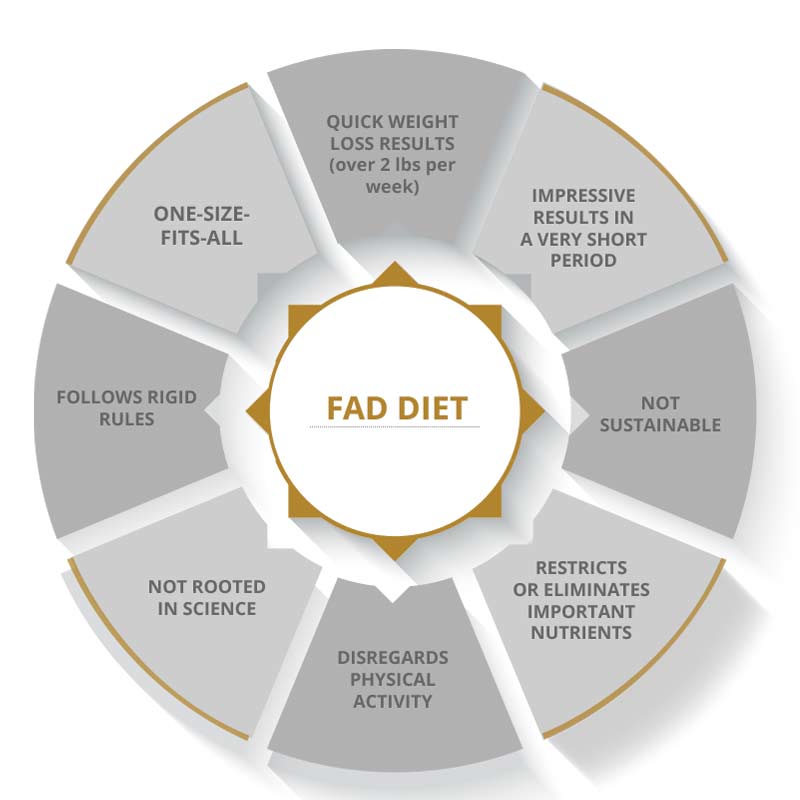
Sometimes it can be difficult to differentiate a fad diet from a healthy eating plan. Nutritionists explain that a fad diet typically promises quick, unsustainable results – such as shedding over two pounds per week or losing weight while lying on a couch and eating chips. They don’t consider a patient’s unique physical and psychological features.
The following graphic summarizes the attributes of the most common fad diets.
Examples of Fad Diets
Some of the most popular fad diets that have appeared in the past decades include:
Ketogenic or keto diet – A meal plan that promotes high-protein and high-fat intake while restricting carbohydrates. It is used in medicine to help children with refractory epilepsy. It is not recommended as a sustainable weight loss plan.
Paleolithic or paleo diet – A popular diet based on our idea of how people in prehistoric times ate. It mostly consists of food that people in the past could acquire by hunting and gathering, such as fruits, nuts, vegetables, meat, and eggs.
Cabbage soup diet – This seven-day eating plan involves eating large amounts of low-calorie cabbage soup and alternating other foods (e.g., fruits and vegetables) on different days. It promises followers they will lose ten pounds a week.
Fruitarianism – It excludes all animal products and involves eating only raw fruits, nuts, and seeds.
Gluten-free diet – A gluten-free diet is prescribed to patients diagnosed with gluten intolerance and celiac disease. However, many people follow this diet, eliminating foods with gluten (wheat, rye, and barley) without a solid reason.
Low-carbohydrate diet – It restricts one of three main macronutrients: carbohydrates. They are present in grains, legumes, fruits, starchy vegetables, and milk. Low-carb meal plans mainly consist of non-starchy vegetables and meat.
Blood type diet – Proponents of this diet follow a specific meal plan based on their blood type. For example, people with blood type 0 eat high-protein foods, while people with blood type A avoid protein.
Macrobiotic diet – This diet is based with ideas stemming from Zen Buddhism. It aims to balance the yin and yang elements in the body through certain food choices. It relies on avoiding food with toxins and consuming whole grains, vegetables, nuts, and seeds.
Liquid diet – A diet in which solid foods are replaced with liquids, such as shakes and juices, to restrict calorie intake.
Long-Term Dangers of Fad Diets
Many fad diets restrict the intake of important minerals and vitamins, which can lead to various health issues, including:
The following questions and answers summarize what you’ve learned about fad diets. They will help you avoid one and only choose eating plans that bring about gradual, lifelong changes to your physique and wellbeing.
What Is Considered a Fad Diet?
A fad diet is any eating plan that promises results that are “too good to be true”, and is usually restrictive. Medical professionals don’t endorse fad diets and consider most of them harmful to long-term health.
Why Is a Fad Diet Bad?
Fad diets are bad because they lead to nutritional deficiencies, potentially causing severe health issues.
What Are the Most Common Fad Diets?
The most common forms of fad diets are low-calorie and low-carb diets.
What Is an Example of a Fad Diet?
The keto diet is an example of a popular fad diet. It’s based on consuming high-fat and high-protein food. The purpose of the keto diet is to deprive the body of glucose found in carbohydrates in order to reach ketosis – the state in which the body uses fat instead of glucose for energy.
Medical professionals prescribe this diet to patients with epilepsy, diabetes, and other diagnosed conditions. However, when used without medical supervision, it can lead to nutritional deficiencies and cause more harm than good.
Note: Research shows that insulin and weight loss are directly connected. Find out how chronically elevated insulin levels can inhibit normal metabolic processes and weight loss efforts by reading our post: Insulin Resistance and Weight Loss.
Conclusion
Lured by the promise of rapid weight loss, millions of people have tried a fad diet at least once – and failed to maintain the results. Unfortunately, fad diets remain popular despite their well-known shortcomings thanks to our human desire for quick fixes, social media influencers and the unattainable beauty standards they promote.
PA Kristina Cadwell graduated from Arizona State University with a Bachelor of Science degree in Biology. She then completed the Physician Assistant program at A.T. Still University graduating with a Masters of Medical Science degree. Kristina has been working in the Aesthetic Medical field for over 15 years. She is certified in neurotoxin cosmetic injection, dermal fillers, laser therapy, chemical peels, and ultrasound. She is known for producing natural results and has extensive knowledge in nutrition, hormone balancing, microbiome health, diet and exercise. Her latest endeavor is the Vibrant Skincare Line, a microbiome-friendly line of skincare that works with your body. Her passion and the reason she does everything she does? Helping you achieve vibrant skin from the inside out.