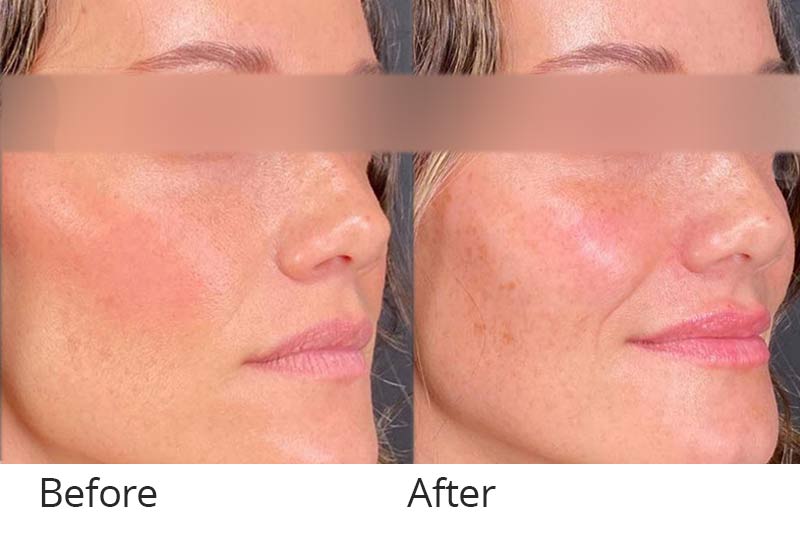
As collagen and elastin degrade with age, the cheeks are among the first areas to show it, becoming thinner and more sunken, with pronounced nasolabial folds that add years to the face. Surgical lifts can address this, but they come with cost, risk, and recovery time. Cheek fillers offer a non-surgical alternative that delivers similar …
Kristina Cadwell
June 19, 2024
·
5 min read
Read on to find out what cheek fillers are, how they work, and what you can expect from the treatment.
What Are Cheek Fillers?
Cheek fillers are dermal filler injectables that rebuild fat in sunken cheeks, fill nasolabial folds, and restore youthful facial contours. The injections contain active ingredients that act as fat fillers and rebuild lost collagen. The procedure is quick, safe, and provides natural-looking results that typically last up to 18 months.
Hyaluronic acid can attract and hold up to 1000 times its weight in water. This characteristic of HA makes it excellent at volumizing sunken areas underneath the skin.
HA-based fillers are biocompatible because our bodies naturally produce this compound and are, therefore, well tolerated. They dissolve over time, but if the patient is unhappy with the results, they can get the filler dissolved quickly using the enzyme hyaluronidase.
Medical providers commonly use Juvéderm Voluma XC and Restylane Lyft fillers to augment the patients’ cheeks and smooth wrinkles in the mid-face area. The results are immediate.
Poly-L-Lactic Acid Cheek Fillers
Sculptra Aesthetic is a poly-L-lactic acid-based filler used for mid-face contouring and cheek volumizing. Poly-L-lactic acid stimulates the body to produce collagen, which may take a few months. The effects of Sculptra are gradual but last longer.
Cheek fillers are popular because they provide a range of benefits.
Minimally invasive, non-surgical procedure
No downtime
Augmented cheeks
Improved mid-face contours
Improved appearance of nasolabial folds
Rejuvenated skin
Natural-looking results
Long-lasting results
Who Is a Good Candidate for Cheek Fillers?
You are a good candidate for cheek fillers if you want to treat aging-related volume loss in your cheeks or reduce wrinkles and folds in the mid-face area.
You need to be generally healthy. Health issues that can disqualify patients from the treatment are:
Bleeding disorders
Skin infections
Keloid or hypertrophic scars
Allergies to dermal filler ingredients
The treatment is not recommended for pregnant or nursing women.
Note: Read our article and find out how to treat Keloid and hypertrophic acne scars. Learn what other types of acne scars are there and how they form.
How to Prepare for the Cheek Filler Procedure?
The first step is to consult your chosen medical provider about the details of the treatment. You’ll discuss your desired goals, the right product for your needs, the required injection amount, and the total cost of the procedure. You also need to disclose your medical records and information about your current medical state.
If you are eligible for the treatment, the doctor may ask you to discontinue using certain medications and supplements, such as blood-thinners. The general advise for dermal filler patients is to avoid alcohol for several days and more invasive cosmetic treatments (e.g. chemical peels) for several weeks.
What Can You Expect During the Cheek Filler Procedure?
Cheek fillers are a quick cosmetic procedure, typically performed in under 30 minutes.
The medical provider first cleans the treatment area with rubbing alcohol and marks the injection sites. They inject the filler and gently massage the area to prevent any asymmetries and the formation of lumps.
Cheek filler treatments cause minimal or no pain because they are mixed with lidocaine, an anesthetic that numbs the treatment area. Patients with a low pain threshold can also ask their medical provider to apply a numbing cream on the treatment area before the procedure.
Patients can resume their daily activities after the treatment, with a few exceptions (e.g., working out for the first 24 hours).
Cheek Filler Results
Cheek fillers volumize the mid-face area, augment the cheeks, and reduce wrinkles.
The results of Juvéderm HA-based fillers are immediate, but side effects like bruising and swelling may mask them. You’ll notice the full results when the side effects subside, usually after one week.
Sculptra provides more gradual results because it takes time to rebuild lost collagen.
How Long Does Cheek Filler Last?
According to filler manufacturers, Restylane Lyft can last up to 12 months, and Juvéderm Voluma and Sculptra up to 24 months. Many patients report enjoying cheek fillers for longer than expected.
Can You Get Cheek Fillers Removed?
The body naturally dissolves cheek fillers within six to 24 months.
If you don’t like your new look or you think you have too much cheek filler, there are options available. If your medical provider used a hyaluronic acid-based cheek filler like Juvéderm Voluma or Restylane Lyft, you can have the fillers dissolved with the enzyme hyaluronidase.
Cheek Fillers: Aftercare
You can resume your daily activities right after a cheek filler treatment, but there are a few things to avoid if you want to ensure the filler settles in properly.
Avoid workouts for 24 hours.
Don’t book any laser treatments for two weeks.
Avoid blood-thinning medications and supplements for several days.
Don’t sleep on your stomach or sides.
Avoid alcohol for 24 hours.
Don’t rub or press the treated area.
Cheek Fillers Side Effects
Cheek fillers are generally safe but can cause mild side effects such as:
Redness
Bruising
Swelling
Itching
Numbness
Pain
These side effects are short-lived and usually disappear within a week.
Serious side effects are very rare and include:
Filler leakage
Tissue death
Injury to blood vessels
Vision loss
You can avoid serious side effects of cheek dermal filler treatments by going to a fully licensed and experienced medical provider.
Cheek fillers have become a common treatment for mid-face aging signs. They’re popular because they are safe and provide natural, long-lasting results. If you’re considering the cheek filler treatment, choose a reputable skin expert with extensive experience injecting dermal fillers.
About the Author:
Kristina Cadwell
PA Kristina Cadwell graduated from Arizona State University with a Bachelor of Science degree in Biology. She then completed the Physician Assistant program at A.T. Still University graduating with a Masters of Medical Science degree. Kristina has been working in the Aesthetic Medical field for over 15 years. She is certified in neurotoxin cosmetic injection, dermal fillers, laser therapy, chemical peels, and ultrasound. She is known for producing natural results and has extensive knowledge in nutrition, hormone balancing, microbiome health, diet and exercise. Her latest endeavor is the Vibrant Skincare Line, a microbiome-friendly line of skincare that works with your body. Her passion and the reason she does everything she does? Helping you achieve vibrant skin from the inside out.