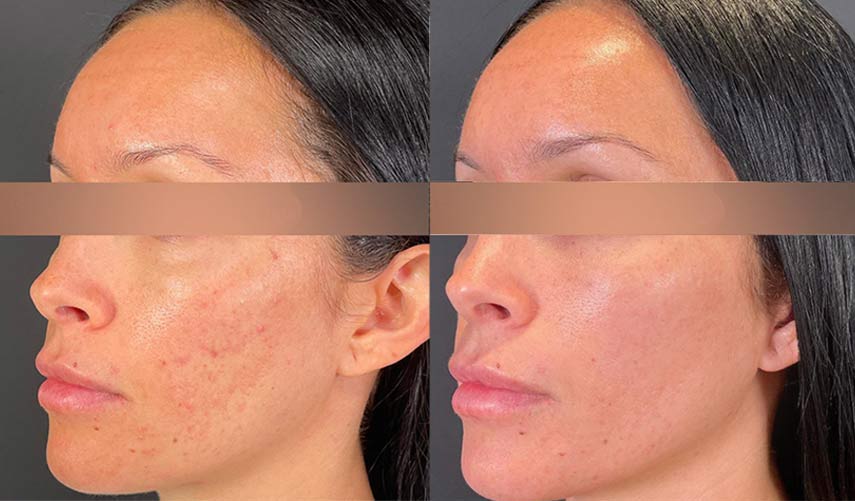
Acne scars affect about one in five acne patients, often causing both physical and emotional distress. Treatment options range from topicals and oral medications to minimally invasive procedures and surgery. Microneedling has become a popular choice for those who haven’t seen results from other non-surgical methods.
Kristina Cadwell
March 6, 2024
·
6 min read
The guide explains microneedling for acne scars, including expected results, aftercare tips, and cost.
What Is Microneedling for Acne Scars?
Microneedling is a minimally invasive, FDA-approved treatment effective in reducing the appearance of acne scars.
Tiny, sterilized needles make small punctures to stimulate collagen production, resulting in a smooth, firm texture and an evened-out skin tone. This procedure is suitable for all skin types and provides lasting results.
The procedure creates controlled micro-injuries to the skin’s surface that activate the body’s natural healing process and tissue regrowth by stimulating collagen and elastin production.
The new collagen repairs the damage by filling in skin lesions and breaking down old scar tissue, improving overall skin texture and tone.
What Type of Acne Scars Does Microneedling Reduce?
There are several acne types and they leave different types of acne scars.
Microneedling is effective for atrophic scars – flat or depressed blemishes that appear because of insufficient collagen. By boosting the production of this vital skin protein, microneedling helps reduce different types of atrophic scars, including the following:
Ice pick scars – Small, sharp indentations with a cone-like shape, common in the cheek area.
Boxcar scars – Broad, rounded, or square-shaped dents with sharp edges, commonly appearing on the lower cheeks, temples, and the jawline area.
Rolling scars – Broad, wavy skin texture with sloping edges and uneven appearance, common on the lower cheeks and jaw.
Hypertrophic and keloid acne scars develop because of excess collagen production. Microneedling is not recommended for treating these types of scars.
What Factors Influence the Effectiveness of Microneedling for Acne Scars?
The effectiveness of microneedling for atrophic acne scars depends on the following factors:
Scar severity
Number of treatments
Who performs the treatment (medical professional vs. at-home devices)
Follow these guidelines to maximize the results and prevent an undesired outcome:
Limit alcohol intake for seven days before the procedure.
Avoid taking NSAIDs (e.g., aspirin, ibuprofen) for one week before the treatment.
Avoid excessive sun or heat exposure for 24 hours.
Cleanse the treatment area with gentle cosmetic products.
Drink plenty of water to reduce the healing time.
Microneedling for Acne Scars Procedure
The licensed provider will clean the treatment area and apply a topical numbing cream to minimize discomfort. While microneedling is not a painful procedure, it may be slightly uncomfortable.
A microneedling device rolls across the skin, penetrating the outer skin layer with fine needles and creating controlled micro-wounds that stimulate collagen production.
The procedure may take up to 30 minutes, depending on the size of the treatment area.
Note: Microneedling can be combined with PRP to treat acne scars and other skin issues more effectively. Learn more about microneedling with PRP.
Microneedling for Acne Scars Results
According to clinical studies, a reduction in scarring occurs several weeks after the first treatment. However, the final stage of scar remodeling may occur after a year.
How Many Sessions of Microneedling for Acne Scars Are Needed?
The severity of acne scars and the desired results determine the number of sessions. Three to six visits spaced four to six weeks apart can significantly reduce mild to moderate scars. Severe scars may require additional sessions at four-to-six-week intervals.
Is Microneedling Permanent for Acne Scars?
The results are typically permanent with proper maintenance care. They may take up to six months to fully show, but the scars do not return to the previous state.
Can Microneedling Make Acne Scars Worse?
Professional micro-needling treatments should not make acne scars worse. However, a worsening of acne scars is possible after an at-home microneedling session, and at-home microneedling devices are not recommended for the treatment of acne scars.
At-home devices cannot guarantee needle sterility or needle length. Many at-home devices drag skin during the treatment and can make puncture holes that tear the tissue. Overusing a micro-needling device or pressing too hard can damage skin and lead to more scarring.
Microneedling is also unsuitable for treating the skin with active acne as it can provoke irritation and breakouts by spreading acne bacteria to other body parts.
Note: Sofwave is a new, FDA-approved skin-tightening cosmetic procedure that uses fractional ultrasound energy to stimulate collagen, tighten the skin, and smooth acne scars.
Microneedling for Acne Scars Aftercare
Downtime is minimal, so you can quickly resume normal daily activities. You may experience some discomfort, such as redness, swelling, and a burning sensation.
The following aftercare tips can help prevent potential complications and maximize the results:
Do not apply makeup for 24 hours after the treatment.
Apply a post-treatment aftercare cream as directed by your licensed provider..
Avoid direct sun or heat exposure for 24 hours.
Avoid rigorous physical exercises for 24 hours.
Use sunscreen protection for at least two weeks after the treatment.
Avoid exfoliants, retinols, and vitamin C serums for at least 7 days.
Do not use skincare products with glycolic acid or alpha-hydroxy acids (AHAs) for 7-10 days post-treatment.
Use gentle, natural skincare products for 48 hours.
Additionally, your doctor may prescribe a topical antibiotic cream to avoid infection.
Microneedling for Acne Scars Side Effects
Side effects are minor and subside on their own after a few days or within two weeks.
The most common side effects include the following:
Redness
Swelling
Bruising
Inflammation
Soreness
Tightness
Skin flaking
Acne breakouts
Should Anyone Avoid Microneedling for Acne Scars
Microneedling is generally considered a safe treatment for people of good health. Medical experts do not recommend it if any of the following applies to you:
Your licensed provider will determine your eligibility before the procedure and recommend the number of sessions based on desired results, skin sensitivity, and scar severity.
How Much Does Microneedling for Acne Scars Cost?
The cost depends on your location, chosen medical spa, and the number of sessions.
Vibrant Skin Bar offers basic microneedling sessions that successfully fade post-acne scars.
Our skin experts also recommend Vivace microneedling, a treatment that combines microneedling with LED therapy and radiofrequency to penetrate deeper skin layers and encourage more collagen production.
If you have flat or depressed atrophic acne scars and topicals are not helping, microneedling may be the solution for you. Clinicians report high patient satisfaction with the procedure because the treatment is quick, relatively painless, and provides permanent results.
Contact our staff for more information and professional inquiries.
PA Kristina Cadwell graduated from Arizona State University with a Bachelor of Science degree in Biology. She then completed the Physician Assistant program at A.T. Still University graduating with a Masters of Medical Science degree. Kristina has been working in the Aesthetic Medical field for over 15 years. She is certified in neurotoxin cosmetic injection, dermal fillers, laser therapy, chemical peels, and ultrasound. She is known for producing natural results and has extensive knowledge in nutrition, hormone balancing, microbiome health, diet and exercise. Her latest endeavor is the Vibrant Skincare Line, a microbiome-friendly line of skincare that works with your body. Her passion and the reason she does everything she does? Helping you achieve vibrant skin from the inside out.