Vitamin C for the Skin: Everything You Need to Know
Proper skin care entails many things, from maintaining adequate moisture levels to protecting the skin from external and internal stressors. Antioxidants are among the most effective cosmetic ingredients that help the skin repair itself, and vitamin C is the most researched and powerful antioxidant in skin care.
Kristina Cadwell
July 22, 2026
·
8 min read
This article focuses on the benefits of vitamin C for the skin and how to use it for optimal results.
What Are the Benefits of Vitamin C for the Skin?
Vitamin C is one of the most effective ingredients in skin care. Cosmetic professionals recommend it for its wide-ranging benefits.
Provides potent antioxidant protection – As one of the strongest antioxidants, vitamin C neutralizes free radicals and oxidative stress from pollution, UV radiation, and metabolic processes.
Enhances collagen synthesis – Vitamin C maintains the activity of two key enzymes in collagen synthesis, prolyl hydroxylase and lysyl hydroxylase. It also limits collagen degradation through its antioxidant effects.
Improves skin barrier function – Vitamin C enhances skin barrier function by supporting the growth and proper maturation of skin cells (keratinocytes).
Minimizes wrinkles – By promoting collagen and reducing environmental damage, vitamin C helps decrease wrinkles and other premature aging signs.
Fades hyperpigmentation – Vitamin C can inhibit the production of the melanin-producing enzyme tyrosinase, minimizing the appearance of dark spots and other forms of hyperpigmentation. The skin appears brighter and more even.
Augments sunscreen effectiveness – Applying a vitamin C product before sunscreen provides superior protection against sun damage compared to using sunscreen alone.
Forms of Vitamin C for the Skin
Vitamin C can be used topically, orally, or intravenously to promote skin health. Topical vitamin C is considered the most effective for anti-aging purposes.
Topical Vitamin C for the Skin
Vitamin C is a frequent “hero” ingredient in serums, moisturizers, and sunscreens. It is added to cosmetic formulations to decrease sun damage and wrinkles, improve hydration, and brighten the complexion.
Vitamin C is often combined with other potent antioxidants, such as glutathione and ferulic acid. This powerful formulation helps strengthen the skin barrier and minimize aging signs. It is suitable for all skin types.
Oral Vitamin C for the Skin
Oral intake of vitamins and antioxidants is vital for the proper functioning of essential bodily processes and overall health. Insufficient vitamin C consumption can lead to a range of skin concerns resulting from collagen loss and dryness.
Health professionals recommend eating balanced, vitamin-rich meals to support skin and overall health. Foods that are particularly high in vitamin C include citrus fruits, strawberries, red and green peppers, broccoli, kale, and Brussels sprouts.
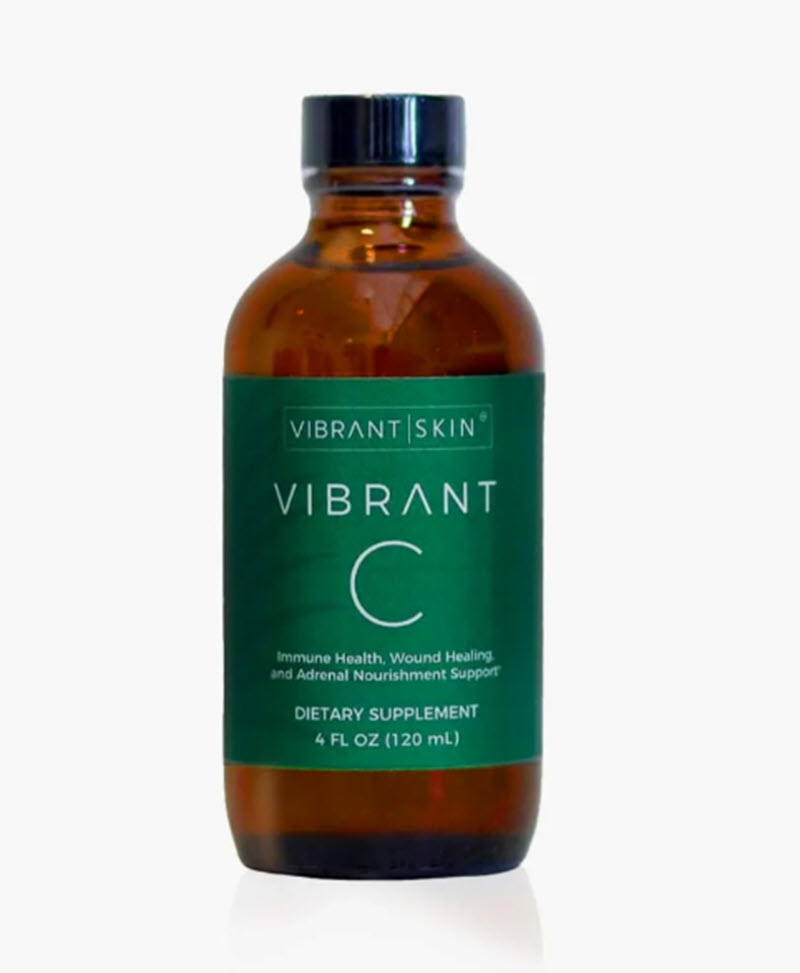
Dietary supplements are a quick way to ensure the recommended daily intake of vitamin C. Vibrant Skin recommends Vibrant C, a vitamin C supplement, formulated with advanced liposomal technology for more efficient delivery and absorption. It is vegan, non-GMO, and has a pleasant lemon-flavored taste.
Vitamin C IV therapy is the method of administering vitamin C intravenously to patients who show signs of vitamin deficiency (e.g., fatigue), or desire quick and efficient skin revitalization. The advantage of IV therapy is that it delivers vitamins at the fastest rate and in the highest dose. Patients report visibly more hydrated and glowing skin after therapy.
How to Choose Vitamin C for the Skin?
Choosing the right vitamin C product for your skin depends on various factors, including your skin type, skin concern, and the form of vitamin C used in the product.
The purest form of vitamin C, L-ascorbic acid, is highly unstable. Skincare companies pair it with other ingredients (e.g., vitamin E) to increase its stability and efficacy or they use more stable forms.
The following table presents common forms of vitamin C used in skincare products, the skin concerns they address, and the skin types for which they are best suited.
Vitamin C Form
Skin Type
Skin Concerns
L-ascorbic acid
Normal, oily, or aging skin.
Aging signs, sun damage, hyperpigmentation.
Tetrahexyldecyl ascorbate
Dry or aging skin.
Wrinkles, uneven skin tone, sun damage, aging signs.
Acne, post-inflammatory hyperpigmentation, early aging signs.
How to Use Vitamin C for the Skin?
Vitamin C serums are applied after cleansing, while vitamin C moisturizers follow cleansers and serums. Sunscreen is necessary as the final step in the morning skincare routine to prevent UV damage.
Because vitamin C is a potent active ingredient, start to incorporate it slowly into your skincare routine. Start with low concentrations (e.g., serums with 10% vitamin C) or use them every other day. If no irritation occurs, use it daily and gradually increase concentrations if necessary.
What Is the Best Time to Apply Vitamin C?
Cosmetic products with vitamin C are best used in the morning to protect the skin from environmental damage during the day. Use them in the morning and evening if the product label instructs so.
How Long Do I Leave Vitamin C on My Face?
Serums and moisturizers with vitamin C are leave-on products and are meant to stay on the skin throughout the day or overnight.
Facial masks with vitamin C should be left on for as long as the product label specifies, which is typically 10-20 minutes.
Finally, to best support topical use of vitamin C, add vitamin C-rich foods or supplements to your diet to hydrate and protect your skin from the inside out.
Can I Use Vitamin C on My Face Every Day?
How often you use vitamin C for your skin depends on your skin type, skin condition, and the formulation you use. Beginners or those with sensitive skin may start using it every other day, while most people use it daily.
Vitamin C and Other Ingredients
Vitamin C is often combined with other ingredients that improve its stability and enhance its anti-inflammatory and antioxidant effects.
What Can You Mix with Vitamin C?
Some of the best complementary ingredients in vitamin C products include ferulic acid, vitamin E, glutathione, hyaluronic acid, and vitamin B.
Combining ferulic acid, vitamin E, and vitamin C helps reduce inflammation and redness and provides strong protection against long-term sun damage.
Vitamin C and glutathione are the ultimate antioxidant pair, supporting each other’s free radical scavenging effects.
Hyaluronic acid helps pull vitamin C deeper into the skin, reduces potential irritation caused by its strong acidic properties, and improves the formula’s stability.
Vitamin B3 (niacinamide) also mitigates potential irritation caused by vitamin C and strengthens the skin barrier, while vitamin C protects and brightens the skin.
Can I Layer Vitamin C with Thiamidol?
Thiamidol is a highly effective ingredient for hyperpigmentation. It inhibits the activity of tyrosinase, the enzyme that helps produce melanin. Products containing thiamidol and vitamin C provide a dual-action solution for dark spots, post-acne marks, and pigmentary changes.
Some formulations contain both ingredients. If using separate products, apply them based on texture. Lighter, water-based serums (often vitamin C) typically go first, followed by thicker formulations.
If the vitamin C in the product is L-ascorbic acid, it may cause irritation when layered with other actives. In that case, use vitamin C in the morning and thiamidol in the evening.
Can Vitamin C Be Used with Peptides?
Vitamin C can be safely used with most peptides to support collagen production and provide anti-aging effects. Some skin experts voice concerns about using high concentrations of L-ascorbic acid with copper peptides, because, theoretically, it reduces their effectiveness. For the best results, use vitamin C in the morning and copper peptides in the evening.
What Should You Never Mix with Vitamin C?
Combining vitamin C (especially L-ascorbic acid) with potent active ingredients, such as retinol, alpha-hydroxy acids, beta-hydroxy acids, and benzoyl peroxide, increases the risk of irritation. Benzoyl peroxide may also reduce the effectiveness of L-ascorbic acid. For the best results, use vitamin C in the morning, and products with these ingredients in the evening.
Side Effects of Vitamin C for Skin
Vitamin C is a strong acid that can sometimes cause the following side effects, especially in people with sensitive skin.
Redness
Irritation
Itching
Stinging
Dryness
Flaky skin
Who Should Avoid Using Vitamin C for the Skin?
Vitamin C in skin care is not recommended for the following individuals:
Children
People with known allergies to ingredients in the product
Review these common questions and answers about vitamin C to learn more about the ingredient and how to use it for the best results.
Which Is Better, Retinol or Vitamin C?
Retinol and vitamin C are considered the superstars in skin care. Neither is better as they offer different benefits. Vitamin C protects and brightens the skin, while retinol speeds up cell turnover and repairs skin damage.
How Long Does It Take for Vitamin C to Fade Pigmentation?
It takes at least four weeks of continuous vitamin C use to start seeing improvements in skin tone. The results are unique for everyone, but most people experience a significant reduction in dark spots within three months.
What Happens When You Stop Using Vitamin C on Your Face?
Discontinuing topical vitamin C use reverses its beneficial effects. As the product no longer offers protection from environmental damage, skin may become duller, less radiant, and with more noticeable dark spots.
Conclusion
Vitamin C is among the most researched and coveted beauty ingredients. It is the skin’s greatest ally against aging factors, such as sun damage and pollution. Vitamin C is the most effective in serums and moisturizers but eating vitamin C-rich foods and taking dietary supplements is also important in nourishing the skin from the inside out.
If you need help choosing vitamin C products, reach out to our friendly cosmetics team at Vibrant Skin. They’ll be happy to recommend the best serums and creams for healthy, glowing skin.
PA Kristina Cadwell graduated from Arizona State University with a Bachelor of Science degree in Biology. She then completed the Physician Assistant program at A.T. Still University graduating with a Masters of Medical Science degree. Kristina has been working in the Aesthetic Medical field for over 15 years. She is certified in neurotoxin cosmetic injection, dermal fillers, laser therapy, chemical peels, and ultrasound. She is known for producing natural results and has extensive knowledge in nutrition, hormone balancing, microbiome health, diet and exercise. Her latest endeavor is the Vibrant Skincare Line, a microbiome-friendly line of skincare that works with your body. Her passion and the reason she does everything she does? Helping you achieve vibrant skin from the inside out.