Vitamin E is often highlighted on skincare product packaging. Brands do this to signal the product’s high effectiveness in supporting skin health. Though not as popular as retinol or hyaluronic acid, vitamin E has a well-established reputation for its skin-enhancing effects.
Kristina Cadwell
August 6, 2026
·
7 min read
This article focuses on vitamin E for the skin, how it works, and how to use it for the best results.
What Does Vitamin E Do to Your Skin?
Vitamin E provides a range of benefits for our general wellbeing, including more resilient skin. Here are the main properties of vitamin E for the skin:
Provides antioxidant protection – By neutralizing free radicals, vitamin E reduces oxidative damage to skin cells.
Protects the skin from photodamage – Vitamin E absorbs energy from UV light, protecting the skin from sun damage.
Has anti-inflammatory effects – Vitamin E modulates inflammatory cytokines, helping reduce inflammation and mitigate inflammatory skin concerns, including atopic dermatitis, acne, and psoriasis.
Improves skin barrier function – Vitamin E helps support the skin barrier by enhancing membrane flexibility and permeability and acting as a gentle emollient (softening the skin and locking moisture in).
Through these mechanisms, vitamin E helps improve cosmetic concerns such as fine lines and wrinkles, dull tone, rough texture, loss of skin elasticity, and overall appearance.
Note: Learn why antioxidants are essential anti-aging ingredients in skin care and how to use them to maximize their effects.
What Are the Different Forms of Vitamin E for Skin?
Vitamin E refers to eight different substances with similar structures and properties, including α-,β-,γ-, and δ- tocopherols and their corresponding (α-,β-,γ-, δ-) tocotrienols.
Alfa-tocopherol is the most abundant form of vitamin E in our bodies, and the form most commonly used in skincare products. As levels of vitamin E decline due to aging and environmental damage, topical and dietary forms can help maintain the nutrient’s protective functions.
Oral Vitamin E
People obtain vitamin E from food, mostly nuts, seeds, whole grains, spinach, broccoli, and olive oil. After it is absorbed, vitamin E is transported through the bloodstream into sebaceous glands, which deliver vitamin E into the skin through sebum (natural oils).
A diet lacking vitamin E is associated with several skin disorders. Oral supplementation may help with melasma, atopic dermatitis, sunburn-induced redness and swelling, and other inflammatory concerns.
Topical Vitamin E
Topical vitamin E helps reduce photodamage and supports hydration and suppleness. For this reason, many anti-aging oils, serums, and moisturizers contain this ingredient. They are formulated with natural or synthetic forms of vitamin E, often listed on product labels as tocopherol or tocotrienol. Consistent use can help retain moisture, strengthen the skin barrier, calm redness and irritation, and enhance overall skin tone and texture.
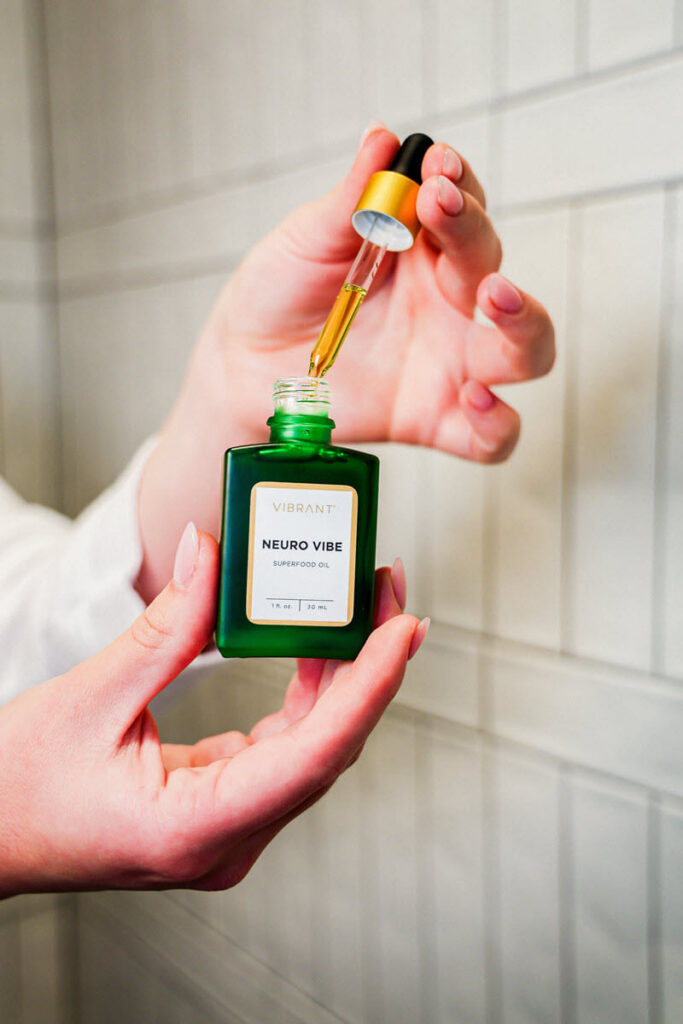
Our skin experts at Vibrant Skin recommend their Neuro Vibe Superfood Facial Oil formulated with rich, nourishing oils naturally rich in vitamin E. It deeply hydrates the skin and provides antioxidant support for a smoother complexion and healthy radiance.
Choosing the right vitamin E product for the skin depends on the person’s skin type and specific concerns and needs.
Dry and sensitive skin can benefit from richer formulations, such as oils and creams containing pure vitamin E. They reduce moisture loss and soothe inflammation.
Combination and oily skin often have optimal levels of vitamin E in their sebum. Lighter formulations, such as serums and moisturizers infused with vitamin E ensure adequate hydration and nourishment without clogging pores.
Serums with vitamin E are a good solution for mature, aging skin. They offer lightweight hydration and antioxidant protection against environmental stressors that contribute to aging.
How to Use Vitamin E for Skin?
The effectiveness of any nutrient and skincare product depends on whether it is adequately used. Follow the instructions on product labels to ensure optimal results.
Serums with vitamin E are typically used after cleansing and before a moisturizer, once or twice daily.
Moisturizers follow cleansers and serums. Oils are either applied after or instead of a moisturizer.
Oral vitamin E supplements are typically taken with a meal containing fats to enhance absorption. Don’t consume doses higher than recommended, because excess vitamin E can build up in adipose tissue and the liver.
What Is the Best Time to Apply Vitamin E to the Face?
Vitamin E serums and oils are best used in the evening to allow optimal absorption. Moisturizers enriched with vitamin E are better suited for a daytime routine because they help boost the effectiveness of sunscreen.
Can I Put Vitamin E on My Face Every Day?
Yes, many vitamin E skincare products are suitable for daily use because of the ingredient’s gentle, soothing properties. You can use them in the morning and evening, depending on the formulation and what the instructions on the label specify. Skincare experts recommend rich vitamin E oils for nighttime use only, especially if you have oily, acne-prone skin.
Note: Learn what products to use if you have oily, acne-prone skin, what ingredients to look for and what to avoid.
What Is the Recommended Dosage of Vitamin E for Skin?
The recommended daily intake of vitamin E for skin health depends on the person’s age and medical condition. See the table below for guidance.
Teens and adults
15 mg
Pregnant women
15 mg
Breastfeeding women
19 mg
Most people get adequate vitamin E doses through food. Vitamin supplements can help people with conditions that inhibit vitamin E absorption.
Topical skincare products are beneficial for men and women with dry and compromised skin caused by aging and sun damage. Vitamin E doses in skincare products typically range from 0,5% to 2%.
Consult your cosmetic provider about the appropriate vitamin E concentration in products and which products may work best for you.
How Long Does It Take for Vitamin E to Work on Your Face?
Visible improvements in skin tone, texture, and hydration may appear after several weeks of consistent use. The results can vary depending on the formulation and other active ingredients in the product.
Vitamin E and Other Ingredients
Vitamin E products usually contain other active ingredients to enhance the effects of this nutrient.
What Should I Mix with Vitamin E for My Face?
Vitamin E is often paired with vitamin C for increased effectiveness. Vitamin E helps stabilize vitamin C, while vitamin C amplifies the anti-aging effects of vitamin E.
Ferulic acid is a common ingredient in formulations with vitamins E and C. As a potent antioxidant, it enhances the stability of vitamin C and the overall photoprotective and antioxidant effects of both vitamins.
Retinol and vitamin E are another powerful combination in anti-aging products. Vitamin E’s soothing, anti-inflammatory properties mitigate the potentially drying and irritating effects of vitamin A.
Note: Learn which seven vitamins are effective for tightening loose skin and maintaining a youthful appearance.
What Not to Mix Vitamin E With?
Vitamin E is gentle and generally safe for use with most other ingredients.
Skincare experts recommend avoiding higher concentrations of vitamin E with chemical acids, such as glycolic and salicylic acid. The combination may cause irritation in sensitive skin types.
They also don’t advise applying thin, water-based serums after vitamin E-rich products. Thicker, oil-based formulas can form a barrier on the skin’s surface and reduce the absorption of lighter products.
What Are the Potential Side Effects of Using Vitamin E for Skin?
Vitamin E in skincare products is generally safe and soothing, but mild side effects are possible. They include:
Redness
Stinging
Rashes
Itching
Mild swelling
Acne breakouts
Contact dermatitis
Using high doses of vitamin E supplements can cause more severe side effects, including:
Nausea
Diarrhea
Cramps
Fatigue
Headache
Rashes
Blurred vision
Bruising
Bleeding
Which Is Better, Vitamin E or Collagen?
Vitamin E and collagen are not comparable as they have different functions in skin health. Vitamin E primarily protects the skin barrier from oxidative stress. Collagen provides structural support in the deeper skin layers. Both ingredients promote skin health through different mechanisms.
Conclusion
Vitamin E is an important ingredient in skin health. It cannot dramatically improve common cosmetic issues, such as wrinkles and laxity, but it can reduce the effects of environmental stressors.
Incorporate vitamin E serums and moisturizers into your daily skincare routine and watch the subtle transformation from dull to healthy, radiant skin.
About the Author:
Kristina Cadwell
PA Kristina Cadwell graduated from Arizona State University with a Bachelor of Science degree in Biology. She then completed the Physician Assistant program at A.T. Still University graduating with a Masters of Medical Science degree. Kristina has been working in the Aesthetic Medical field for over 15 years. She is certified in neurotoxin cosmetic injection, dermal fillers, laser therapy, chemical peels, and ultrasound. She is known for producing natural results and has extensive knowledge in nutrition, hormone balancing, microbiome health, diet and exercise. Her latest endeavor is the Vibrant Skincare Line, a microbiome-friendly line of skincare that works with your body. Her passion and the reason she does everything she does? Helping you achieve vibrant skin from the inside out.