Among the diverse range of filler brands on the market, Revanesse Versa fillers have established themselves as a safe and effective way to rejuvenate the skin and enhance facial features.


Revanesse Versa is an FDA-approved dermal filler made up of hyaluronic acid (HA), a naturally occurring polysaccharide with exceptional water-binding properties. HA is responsible for maintaining skin hydration, plumpness, and elasticity.
Versa’s distinguishing feature is that the hyaluronic acid molecules contained in the injectable are perfectly spherical and uniform. Because of this, the body rarely reacts to them adversely. Versa fillers cause less swelling and the results are smooth and soft.
Patients and cosmetic experts love Revanesse Versa fillers because they provide the following benefits:
Versa filler is one of the best solutions for non-surgical wrinkle reduction. It is FDA-approved to treat the following areas:
Cosmetic professionals also use Versa in these off-label procedures:
Versa is recommended for people looking to enhance their natural beauty by restoring the skin’s glow, elasticity, and youthful suppleness. It is also a popular preventative measure for premature skin aging.
Patients must meet the following criteria:
During the initial consultation, the medical provider instructs the patient on what to do before the treatment to reduce the risk of swelling and bruising and ensure maximum safety.
The general before-filler guidelines include the following:
The procedure is similar for all dermal fillers. The medical provider cleanses the patient’s skin with rubbing alcohol and applies a numbing cream to the treatment area to decrease potential pain and discomfort.
They mark the injection spots on the target area with a special marker and proceed with the injection. The process is quick and may cause a slight stinging sensation where the needle punctures the skin, but no pain. When the filler is injected, the provider massages the treated area to facilitate proper filler placement and prevent the formation of lumps.
The whole procedure, with numbing cream application, takes up to 60 minutes.
The amount of filler needed for the treatment depends on the size of the treatment area, the severity of aging signs, and the patient’s goals.
A single syringe of Versa contains 1.2 mL of gel. That may be enough for a small area and mild wrinkles, but patients usually need more to achieve noticeable results.
The following are estimates for the number of syringes needed per treatment area.
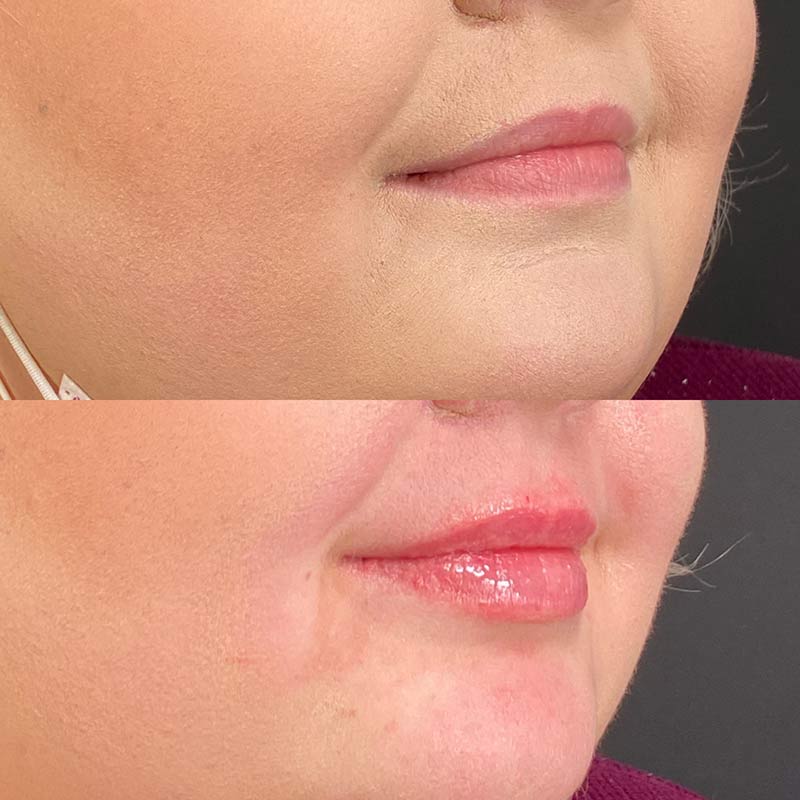
Versa fillers provide instant volumizing and tightening effects. However, it can take two to four weeks for the final results to appear. They vary depending on the treatment area and desired effects. Patients experience significantly fewer wrinkles, minimized nasolabial folds, fuller lips, lifted jowls, a firmer mid-face, and a brighter under-eye area.
The longevity of Versa fillers depends on each patient, their age, genetics, skin elasticity, and the severity of their wrinkles. In most cases, Versa results last up to one year with occasional touch-ups, as recommended by medical professionals.
As with other injectable treatments, Versa filler aftercare consists of the following dos and don’ts:
Note: Read our blog post on dermal filler aftercare for more guidelines and details on each aftercare tip.
As with any injectable, there are some risks associated with Versa fillers, though patients report less swelling with Versa than with other HA fillers.
The risk of complications is minimized by receiving treatment from a skilled, licensed medical professional.
Note: Learn how to prevent bruising after lip and cheek filler.
These conditions are contraindications for a Versa treatment:
If you are looking for a Versa treatment in the Phoenix area, Vibrant Skin Bar offers Versa at $649 per syringe.
The total treatment cost depends on the patient’s unique cosmetic needs and the amount of injectable needed for the procedure.
The following section provides answers to frequent questions about Versa.
Like other hyaluronic acid fillers, such as Juvéderm and Restylane, Versa can be dissolved with the enzyme hyaluronidase in a procedure similar to the filler injection. This is the go-to solution for patients who experience asymmetries, lumps, or other unsatisfactory results. Patients can also wait for the Versa fillers to dissolve on their own.
Note: Learn more about the process of dissolving lip fillers.
Versa and Botox are not comparable because they typically treat different aesthetic concerns and treatment areas. Botox addresses dynamic wrinkles resulting from muscle movement, while Versa treats static wrinkles and loose skin caused by collagen decline.
The following table shows the main differences between Versa and Botox.
| Versa | Botox | |
|---|---|---|
| Type of injectable | Filler | Neurotoxin |
| Primary ingredient | Hyaluronic acid | Botulinum toxin |
| How it works | Volumizes and tightens wrinkled, sagging, and thinning skin in the lower face. | Smooths wrinkles in the upper face. |
| FDA-approved treatment areas | Nasolabial folds, marionette lines, chin, corners of the mouth. | Forehead, lines between the eyebrows, corners of the eyes. |
| Longevity of results | Up to one year | 3 – 6 months |
Versa and Botox complement each other and, when combined, provide a cumulative anti-aging effect. These two injectables are often paired in a treatment known as the liquid facelift.
Like Juvéderm, Versa is made from hyaluronic acid and provides many of the same benefits. One is not better than the other, because each has specific strengths that make it suitable for different people.
Versa typically causes less swelling and may be a better choice for patients with sensitive skin. Juvéderm has a wider range of products, some of which are thicker (e.g., Voluma) and provide a more prominent volumizing effect. The choice comes down to a personal preference and the cosmetic provider’s recommendation.
Note: Find more about how Versa and Juvéderm compare.
With its innovative manufacturing process that guarantees uniformity of the hyaluronic acid molecules, Versa fillers are a great solution for those seeking to restore volume, smoothness, and youthful vitality to their skin.
If you’re looking for a dermal filler treatment in the Phoenix area, visit Vibrant Skin Bar. Our team of experts has years of experience safely enhancing your natural beauty.