Dermal fillers have transformed the field of non-surgical facial rejuvenation and gained worldwide popularity. While most patients prefer temporary injectables, others opt for permanent solutions that integrate with the tissue to restore more severe volume loss and provide longer-lasting smoothness and elasticity.
This article explores the benefits, side effects, and removal methods of permanent fillers, explains how they work, and outlines effective alternatives.
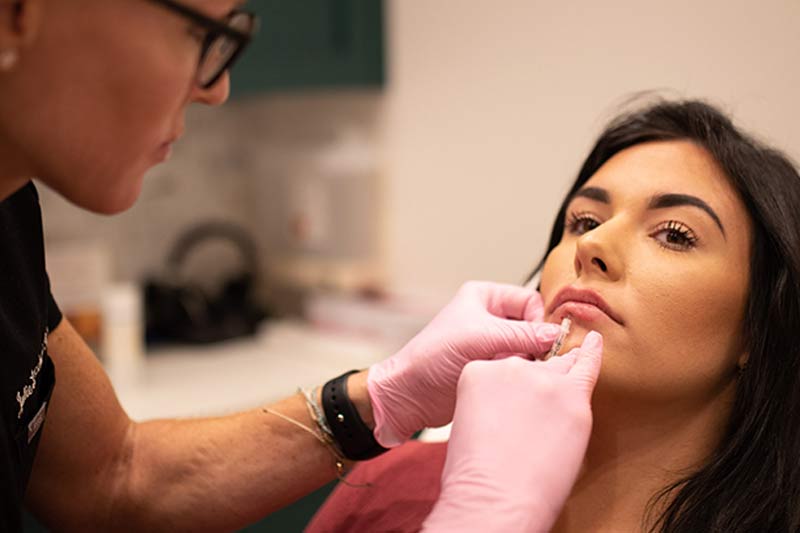
What Are Permanent Fillers?
Permanent fillers are made from non-degradable, biocompatible materials such as silicone, polyacrylamide hydrogel, and polymethylmethacrylate (PMMA). They are used to address deep wrinkles, acne scars, sagging, and prominent volume loss, and are typically injected into thicker facial areas such as the nasolabial folds.
Note: Learn more about nasolabial fold filler.
Because these fillers are non-biodegradable, the body does not break them down. Instead, they integrate into surrounding tissue and remain in place for years, providing long-lasting contouring and volumization.
Unlike temporary fillers, they can last five years or longer and do not require frequent touch-ups. However, while they may be cost-effective over time, they also carry higher risks and are difficult to reverse or modify once injected.
Types of Permanent Fillers
Permanent fillers differ in terms of durability, composition, and administration technique.
These are the most common permanent filler types:
| Material | Brand | Administration | Durability | Approval status |
| Polymethyl methacrylate (PMMA) microspheres suspended in a collagen gel | Bellafill | Allows precise shaping and contouring and can be layered over multiple sessions. | Acne scar correction up to one year and nasolabial folds correction up to five years. | FDA-approved for the correction of moderate to severe facial acne scars and nasolabial folds. |
| Silicone microparticles or silicone oil | Bioplastique (medical filler) and Silikon 1000 (cosmetic filler) | The injector inserts liquid silicone with a small needle or microcannula using a microdroplet technique. | This non-resorbable filler can last for decades, but experts warn against its use for cosmetic purposes due to the serious complications it may cause. | Silicone oil fillers are not FDA-approved for cosmetic enhancement. The FDA has approved silicone injectables for specific medical uses inside the eye. |
| Polyalkylimide, a synthetic, biocompatible gel | Aquamid | This non-absorbable soft-volume filler can be injected in larger quantities in a single session. | Three to five years. | Not approved in the U.S. |
How Do Permanent Fillers Work?
Permanent fillers contain non-resorbable synthetic substances that are injected into the skin to address scars, folds, wrinkles, and other skin irregularities, restoring volume and firmness.
Some permanent and semi-permanent fillers, such as Bellafill, can also stimulate collagen production around tiny, biocompatible microspheres, providing long-term structural support.
Although the injected substances remain in the body indefinitely, the aesthetic effects are not lifelong. Results gradually diminish as the skin ages and facial tissues continue to lose tone and elasticity.
Benefits of Permanent Fillers
Permanent filler injectables offer a wide range of benefits, including:
- Restoring substantial volume loss in areas such as nasolabial folds, marionette lines, lips, temples, and cheeks, making them effective for deep wrinkles, pronounced creases, and hollows.
- Enhancing facial symmetry and definition, refining contours, and improving skin firmness and texture with collagen stimulation.
- Providing long-lasting results, reducing the need for frequent reinjections compared to temporary fillers.
- Maintaining stable results, as the formulations are not significantly affected by metabolism or natural breakdown.
- Offering greater cost-effectiveness over time, as fewer touch-ups and maintenance treatments are needed.
- All treatments are customizable and tailored to the patient’s unique facial features and aesthetic goals.
- The procedure is quick and minimally invasive with little to no downtime.
Permanent Fillers: Risks and Side Effects
The most common risks associated with permanent fillers include:
- The immune system tries to eliminate the filler by treating it as a foreign substance. This can cause granulomas (inflammatory nodules resembling hard lumps).
- As tissues age and muscles lose tone, the initial effects fade or become unnatural.
- Permanent fillers cannot be repositioned or adjusted to match the structural changes that naturally occur over time.
Scientific data also shows that non-resorbable fillers can cause side effects even years after the procedure. Experts also advise against silicone-based fillers due to risks such as:
- Chronic inflammation
- Skin discoloration
- Lumps
- Erythema
- Edema (swelling)
- Allergic reactions
- Infection
- Vascular occlusion
- Inflammatory nodules (granulomas)
- Tissue loss
Who Can Get Permanent Fillers?
Healthy adults aged 22 and older can safely undergo the procedure to correct moderate to severe wrinkles and folds, acne scars, post-surgical nose dips and indented scars, and prominent volume loss.
The treatment is recommended for individuals with realistic expectations who prefer a non-surgical long-term cosmetic solution. If you have a medical condition or other health concerns, consult a licensed professional before scheduling the procedure.
Who Should Avoid Permanent Fillers?
The following groups should avoid permanent fillers or seek professional medical advice to determine their suitability:
- Individuals with allergies to filler ingredients (e.g., PMMA)
- Those with autoimmune disorders
- Patients with certain blood disorders
- Individuals with a history of keloid scarring
- People with active skin infections or inflammation
- Pregnant or breastfeeding women
- Patients with large areas of sagging skin (e.g., following significant fat loss)
Permanent Filler Procedure and Recovery
The procedure length depends on the type of filler, the desired outcome, and the injection technique. Deep-plane insertions go beneath the muscle layers, mid-plane injections target the facial tissue, and superficial-plane fillers are injected closer to the skin’s surface.
The most common steps during the procedure include:
- The medical provider cleanses the treatment area and applies a numbing cream to minimize discomfort.
- Once the skin is prepared, they mark the injection points and proceed with the filler placement.
- The provider may gently massage the area to ensure even distribution of the filler.
- The injection typically takes 20 to 40 minutes, depending on the size and number of treated areas.
Most permanent fillers require only a single treatment to achieve the desired correction. Additional touch-ups may be scheduled to refine symmetry or enhance volume once the initial filler has settled.
Recovery time is minimal, and most patients can return to daily activities immediately. Some people may experience mild swelling, redness, or tenderness at the injection site for a few days. It is important to monitor the area for any delayed reactions and follow filler aftercare guidelines. Choosing a skilled, board-certified provider with a thorough understanding of facial anatomy is essential for a safe and precise procedure.

Cost of Permanent Fillers
The total cost of permanent fillers depends on the specific product used, the treatment area, the severity of the concern, the number of syringes required, and the provider’s expertise and location.
In the U.S. typical cost per syringe averages about $500-1,500, depending on the brand, provider, and location.
How to Prepare for a Permanent Filler Procedure
The following pre-care recommendations can maximize the fillers’ effectiveness and minimize the risk of complications:
- Stay well-hydrated and arrive with clean, makeup-free skin.
- Avoid blood-thinning medications, such as Aspirin or ibuprofen, for 7 to 10 days before treatment to reduce the risk of bruising.
- Discontinue other blood-thinning supplements, including fish oil, St. John's Wort, flaxseed, vitamin E, vitamin D, garlic, ginkgo biloba, and ginseng.
- Refrain from drinking alcohol 24 to 48 hours before and after your appointment.
- Consult your provider about natural supplements that prevent bruising, such as Arnica.
- Notify your provider if you currently have, or have recently had, cold sores, active infections, flu-like symptoms, or if you’ve taken any prescribed medications within the last 30 days.
- Consult your provider about the safety of the procedure if you’ve had any recent immunizations, tattooing, or permanent makeup within the past 30 days.
- Wear comfortable clothing and avoid scheduling major events immediately after the treatment, as temporary redness or minor swelling can occur.
Note: Learn what to do if you notice bruising after cheek filler or bruising after lip filler.
Permanent Filler Removal
Unlike hyaluronic-acid-based temporary fillers, permanent injectables cannot be easily removed, modified, or dissolved. Any removal procedure is typically complex, invasive, and may not produce predictable or wanted results.
If you are dissatisfied with the outcome, several removal options are available, depending on the filler type and the specific concern.
Permanent Filler Removal Methods
Permanent fillers can be removed or managed in several ways:
- Surgical excision – This is the most definitive removal method and involves physically extracting the filler through a small surgical incision. However, it is also the most invasive option and carries a higher risk of post-removal irregularities and scarring.
- Laser-assisted removal – Intralesional laser treatments can break down, soften, or liquefy granulomas, minimizing the risk of infections, inflammation, and lump formation. This option is less invasive than surgery but may be less effective for larger or deeper deposits.
- Ultrasound-guided removal – High-frequency ultrasound can precisely locate and dissolve filler particles, making the extraction easier. This technique is also valuable for identifying misplaced fillers and reducing potential complications from blind removal attempts.
- Corticosteroid injections – While they do not remove the filler itself, steroids can reduce inflammation, shrink granulomas, alleviate swelling, and soften firm filler deposits. However, they carry risks such as skin atrophy and spider veins.
- Antibiotic therapy – Prescribed antibiotics can alleviate inflammatory symptoms such as nodules or swelling. Antibiotics are generally used alongside other removal methods.
- Needle aspiration – If the filler is soft enough, the provider may attempt aspiration with a fine needle. However, this method is rarely used and carries risks such as trauma, vascular occlusion, and scarring.
- Combination approaches – Some providers combine treatments, such as surgical excision with laser or ultrasound methods, to reduce the risk of complications and improve overall outcomes.
Challenges of Permanent Filler Removal
Removing permanent fillers is a complex, unpredictable, and potentially risky process. Since there are no universal reversal agents (such as hyaluronidase injections for HA-based fillers), correction typically depends on surgical or mechanical extraction, which carries greater risks.
The most common problems that may occur during the removal process include:
- Migration – Fillers can shift or spread from their original placement, making removal more challenging and requiring multiple sessions or a combination of techniques.
- Encapsulation – The body may form a protective, fibrous capsule around the filler, resulting in firm nodules or lumps that are difficult to break down or dissolve.
- Scarring – Surgical excision and surface irregularities caused by filler migration can result in long-lasting or visible scarring after the procedure.
- Infection – Non-biodegradable fillers can trigger chronic inflammation or biofilm-related infections, which may further complicate the removal process and require both medication and medical interventions.
- Unpredictable tissue response – Individuals’ reactions to permanent fillers vary widely. Patients may develop granulomas, fibrosis, or atypical inflammatory responses.
Permanent Filler Alternatives
You can rejuvenate your skin, reduce surface irregularities, and improve overall texture and tone using alternative cosmetic treatments. While these options typically require ongoing maintenance, they may be a safer and more flexible choice for people who wish to avoid the long-term risks and complications associated with permanent fillers.
Temporary Fillers
Temporary HA fillers deliver immediate volume and can last up to two years with regular maintenance. They lift, contour, and smooth facial irregularities and hollow areas, including the temples, cheeks, and tear troughs.
These fillers gradually dissolve over time and can be safely reversed with hyaluronidase injections if needed.
Semi-Temporary Fillers
Biostimulating injectables such as Sculptra and Radiesse are effective alternatives to permanent fillers because they do more than simply add volume – they stimulate the body’s natural collagen and elastin production, promoting deep skin rejuvenation.
Results develop gradually and look more natural. Periodic maintenance treatments extend the results and sustain long-term benefits such as firmness, elasticity, and volume.
At Vibrant Skin Bar, you can schedule two semi-permanent fillers, Radiesse ($749 per vial) and Sculptra ($900 per vial).
Botox
Botox is a widely used anti-wrinkle treatment that involves injecting small amounts of botulinum toxin into dynamic facial muscles to reduce their activity and smooth the skin’s surface.
The most commonly treated areas include frown lines, forehead lines, crow’s feet, and bunny lines. Botox can be used as a preventive measure against premature aging and is considered a safer alternative to permanent fillers if you wish to avoid the long-term risks.
Fat Grafting
Fat grafting (fat transfer) is a cosmetic procedure that restores volume using the patient’s own fat harvested from other body areas, reducing the risk of allergic reactions or rejection. It can soften hollows and creases, improve facial symmetry, and promote tissue regeneration with your own stem cells.
Nano-fat grafting is a more advanced technique designed for delicate areas such as the under-eye region, around the mouth, and the lips.
Laser Treatments
Laser resurfacing improves skin tone and texture, reduces discoloration, and enhances natural elasticity by stimulating collagen production in deeper skin layers. It addresses fine lines, sun damage, scars, and other irregularities without adding volume.
Depending on your skin condition and aesthetic goals, multiple sessions may be required to achieve optimal, long-lasting results.
Ultrasound Therapy
Sofwave™ therapy is a non-invasive cosmetic treatment that uses patented ultrasound technology to reduce fine lines and wrinkles while improving skin elasticity. It selectively heats the mid-dermis without damaging the skin’s surface, providing a natural lifting effect, and enhancing tone, texture, and mild skin laxity.
It is suitable for all skin types and tones and can be performed year-round, unlike laser therapy.
Radiofrequency (RF) Therapy
Radiofrequency is a non-injectable skin-tightening treatment that uses controlled radiofrequency waves to heat deeper skin layers and stimulate collagen and elastin production. By remodeling the skin from within, it improves both texture and tone.
This “non-surgical facelift” improves skin firmness and elasticity, with results lasting up to several months, depending on the treatment plan.
Microneedling
Microneedling is a minimally invasive cosmetic procedure that uses tiny, sterile needles to create controlled micro-injuries in the skin, stimulating the body’s natural healing response. This technique boosts collagen and elastin production, resulting in firmer, smoother, and more youthful-looking skin.
It can be performed on the face, body, and scalp and is often combined with platelet-rich plasma (PRP) to enhance skin rejuvenation and improve overall results.
PDO Thread Lifting
PDO threads are FDA-approved, biodegradable medical sutures inserted beneath the skin to improve elasticity over several months. This popular anti-aging treatment stimulates collagen production and provides an immediate lifting effect in areas prone to sagging, including the eyebrows, cheeks, jawline, and neck.
Facelift
Facelift, or rhytidectomy, is a surgical procedure that provides dramatic, long-lasting rejuvenation by removing or repositioning excess skin and fat through carefully placed incisions. It effectively addresses loose or sagging skin in the cheeks and jowls, deep folds around the nose and mouth, and excess fat or skin in the neck area.
This option is best suited for prominent skin laxity that cannot be corrected with injectables or non-surgical treatments. However, it carries a higher risk of infection, nerve injury, scarring, and a longer recovery period.
Conclusion
Non-degradable fillers enhance skin texture and restore volume, offering long-lasting results, making them a preferred option for those seeking permanent skin rejuvenation. However, they are irreversible, carry higher risks, and are more challenging to correct. Choosing a reputable clinic with extensive experience in permanent filler injections is crucial to minimizing the risk of long-term complications.
Contact our Vibrant Skin Bar professionals to explore alternative cosmetic solutions to add volume and prevent premature aging.